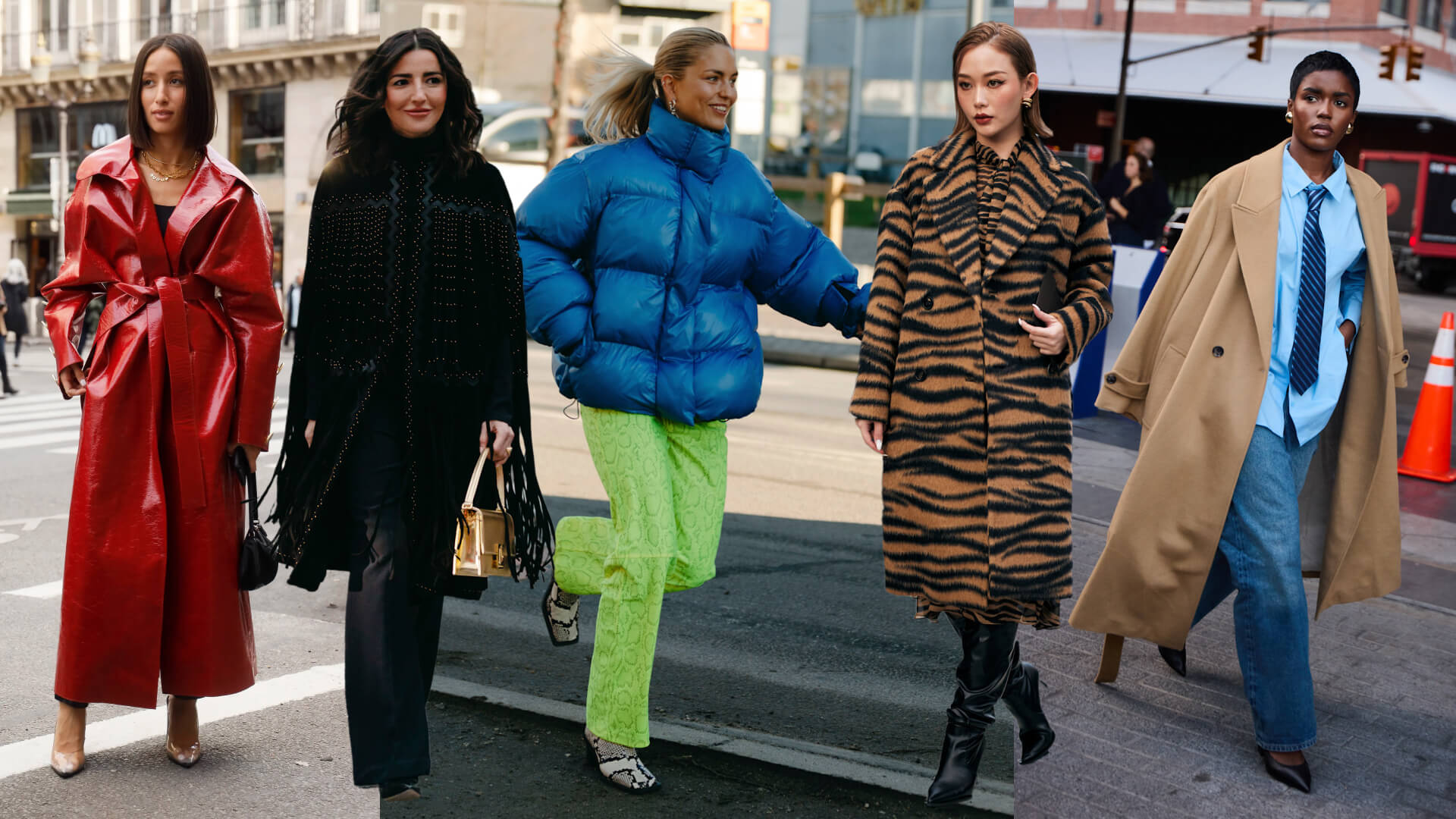
Most women need three coats, not ten: a trench for autumn and spring rain, a wool overcoat for cold weather and anything smart, and a puffer or quilted jacket for genuinely cold, casual days. A tailored blazer sits underneath all three as a transitional layer. If you buy one designer-inspired coat this season, make it a knee-length wool overcoat in camel, navy or charcoal, it goes over everything you own and reads as the most expensive thing in your outfit.

Outerwear is the highest-leverage purchase in a cold-weather wardrobe, because it is the layer people actually see. A plain outfit under a well-cut coat looks considered; a good outfit under a poor coat does not. Our complete designer-inspired wardrobe guide covers the wardrobe underneath this piece is about the layer on top.
What are the main types of designer coats for women?
Seven silhouettes cover almost everything on the market. The table shows what each one is actually for.
| Coat style | Typical fabric | Best temperature | Wears over | Best for |
|---|---|---|---|---|
| Trench coat | Cotton gabardine | Mild to cool, wet | Tailoring, dresses, knitwear | Autumn and spring, the most versatile single coat |
| Wool overcoat | Wool or wool-cashmere blend | Cold and dry | Suits, knit dresses, jeans | Smart winter dressing, the classic investment |
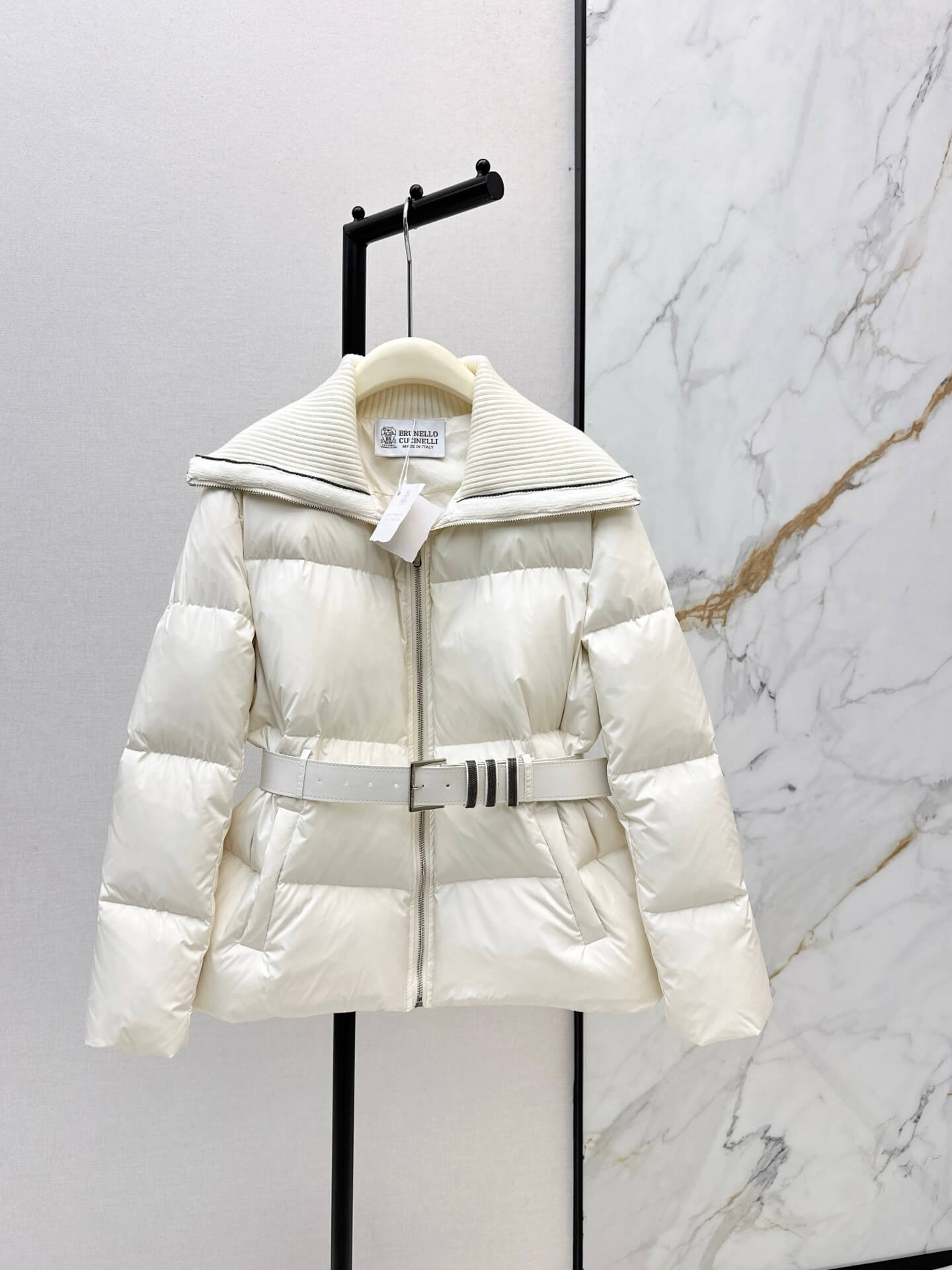
| Puffer / quilted jacket | Down or synthetic fill, nylon shell | Cold to very cold | Denim, knitwear, activewear | Casual warmth and weekends |
| Wrap coat | Wool or soft blend | Cool to cold | Dresses, tailoring | A soft, unstructured silhouette with no buttons |
| Tailored blazer | Wool, twill, linen blend | Mild | Shirts, tees, dresses | Transitional weather and indoor polish |
| Leather or biker jacket | Leather or leather-look | Mild to cool | Denim, knits, midi dresses | Adding edge to a soft outfit |
| Quilted barn jacket | Quilted cotton or nylon | Cool | Jeans, cords, knitwear | Countryside and old-money leaning looks |
Which coat should you buy first?
The wool overcoat, if your winters are cold. It is the only outerwear piece that works over a suit, a knit dress and jeans without looking out of place in any of them, and it carries the most formal outfit you are likely to wear. Knee-length is the most flexible cut, long enough to cover a midi hem, short enough not to swamp you.
If your climate is mild and wet rather than freezing, buy the trench first instead. It handles rain, layers over tailoring, and belts to give shape to an otherwise straight outfit. Both sit squarely inside the aesthetic our quiet luxury guide and old money style guide describe plain, well-cut, no logo.
What fabric should you look for in a winter coat?
- Wool content is the main thing. A higher proportion of wool holds warmth and shape better than a mostly-synthetic blend, which tends to pill at the sleeves and collar first.
- Cashmere adds softness, not durability. A wool-cashmere blend feels beautiful but wears faster than pure wool. Blends give you most of the hand-feel with more resilience.
- For a trench, look for tightly woven cotton gabardine. The dense weave is what makes it shed rain rather than soak it up.
- For a puffer, warmth comes from loft. A jacket that springs back after you squeeze it traps more air, and more trapped air is what keeps you warm.
- Check the lining. A fully lined coat slides over knitwear instead of dragging at it, and it is the detail cheap outerwear skips first.

How should a coat actually fit?
Try it on over a jumper, never over a t-shirt, a coat that fits bare arms will bind over the layers you will genuinely wear. Then check three points: the shoulder seam should sit at the edge of your shoulder or slightly beyond, you should be able to cross your arms in front of you without the back pulling, and the sleeve should end at the wrist bone or just past it.
Length is proportion, not height. A coat that ends mid-calf reads dramatic; knee-length reads classic; anything ending at the widest part of the hip is the least flattering option on most people. If the coat is going over a midi dress or skirt, the coat should be longer than the hem or clearly shorter, not level with it.
How do you style designer-inspired outerwear day to day?
- Wool coat + knit dress + knee-high boots. One long unbroken line. The single most elegant cold-weather outfit there is.
- Trench + straight jeans + loafers. Belt it rather than buttoning it for a softer shape, see our guide to flats and loafers that never date.
- Puffer + tailored trousers. The contrast between casual outerwear and sharp trousers is what stops a puffer looking like sportswear.
- Blazer + midi skirt + ballet flats. Transitional-weather polish, and one of the formulas in our designer-inspired outfit formulas guide.

The bag matters more with outerwear than without it, because a coat flattens everything underneath. A structured tote against a soft wool coat, or a quilted or puffer bag against a sleek trench, gives the outfit the texture contrast set out in how to match designer bags and shoes. Footwear follows the same logic, our designer shoe styles pillar covers what pairs with what.
What colour coat is the most versatile?
Camel is the strongest first choice for a wool coat: it lifts black, navy, grey and cream, and it photographs as expensive in a way black rarely does. Navy and charcoal are the safest if most of your wardrobe is already dark. Black is the most practical but the least interesting, and it is the colour where poor fabric shows most obviously.
For a trench, stone and beige remain the default for good reason. Save burgundy, forest green and bolder shades for a second coat, once the neutrals are covered. Our fall capsule wardrobe shows how a two-neutral palette makes every layer interchangeable.
What mistakes do people make buying outerwear?
- Buying the statement coat before the neutral one. A patterned or bright coat is remembered every time you wear it; a camel one is not, which is exactly why it works harder.
- Sizing for a t-shirt. The most common fit mistake, and it makes the coat unwearable on the coldest days.
- Ignoring the hem-to-coat relationship. A coat that ends level with a dress hem chops the body in half.
- Overpaying for a lining-free coat. Construction shortcuts hide inside our quality buying checks for leather goods apply the same principle to coats.
- Owning only one weight. A single heavy coat means you are either too warm in October or too cold in January. Two weights beats one expensive one, a point our timeless wardrobe guide and five foundation pieces both make.
Where can you shop designer-inspired coats and outerwear?
Browse Clothing for coats, jackets, blazers and knitwear, Bags for the piece that carries the outfit, Designer Shoes for the boots and loafers that go underneath, and Accessories for the belt or scarf that finishes it. Travelling with a coat is its own problem, our luxury travel outfits guide covers packing around one.

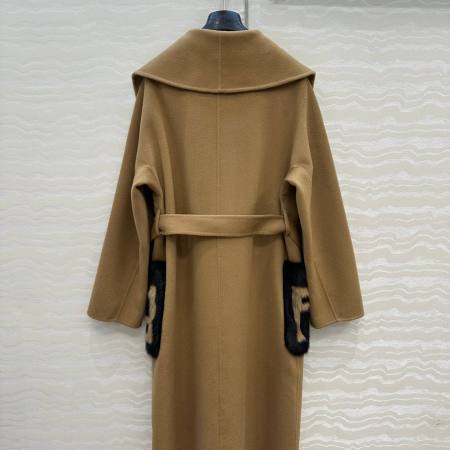


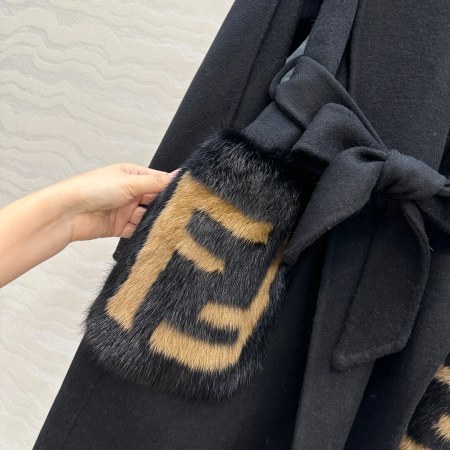
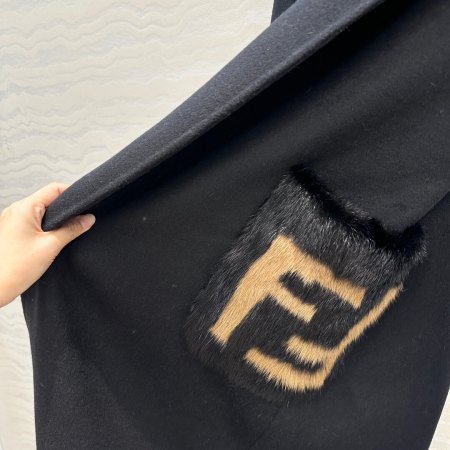
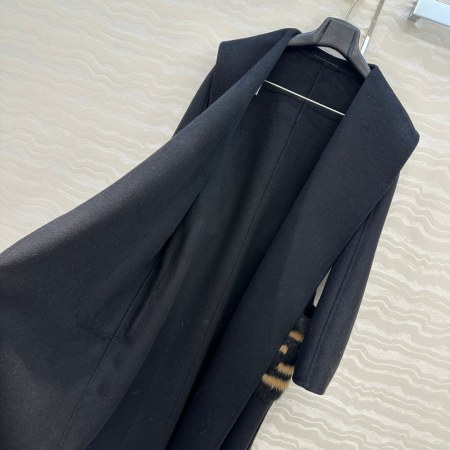
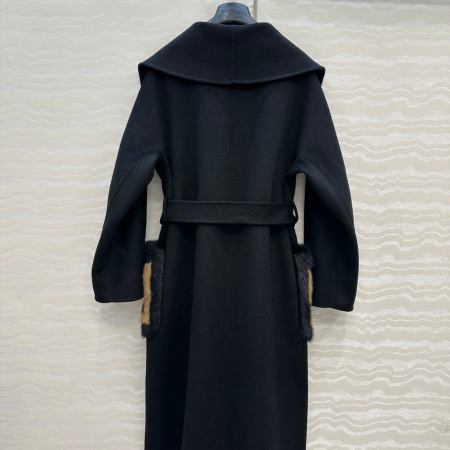
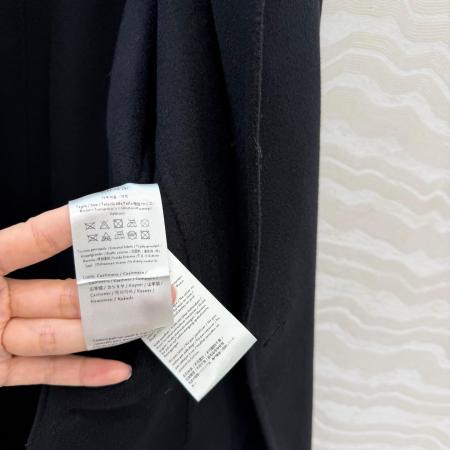


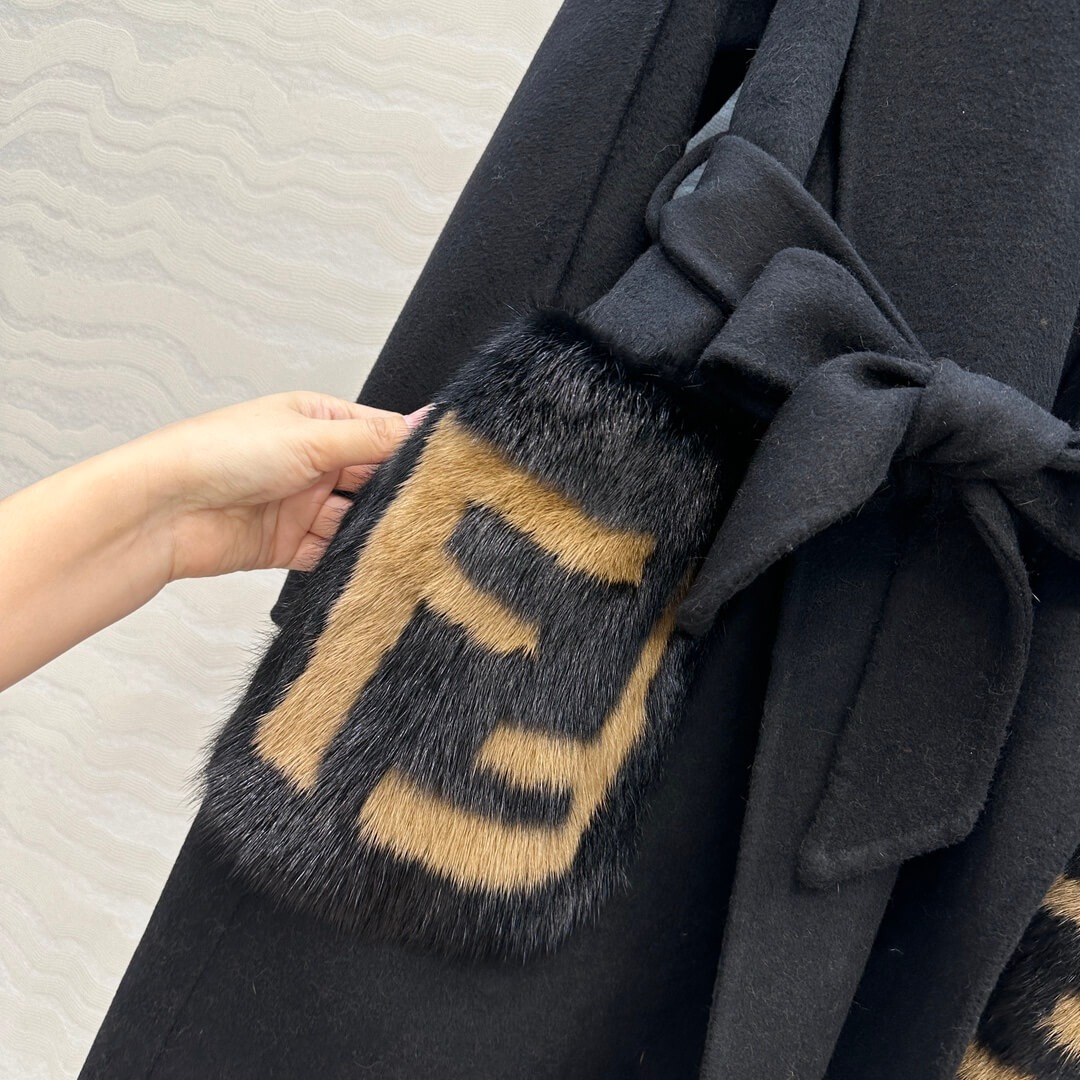

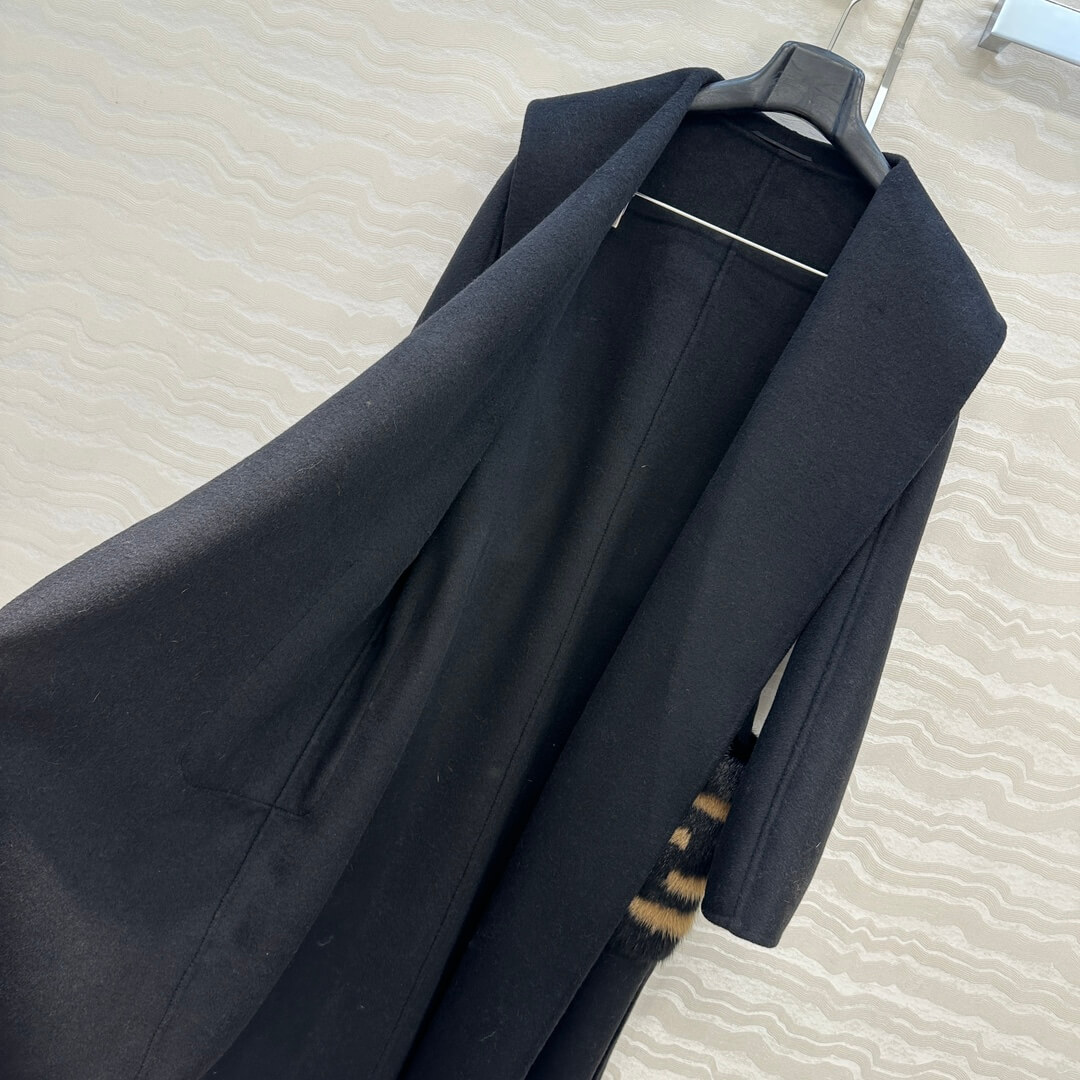
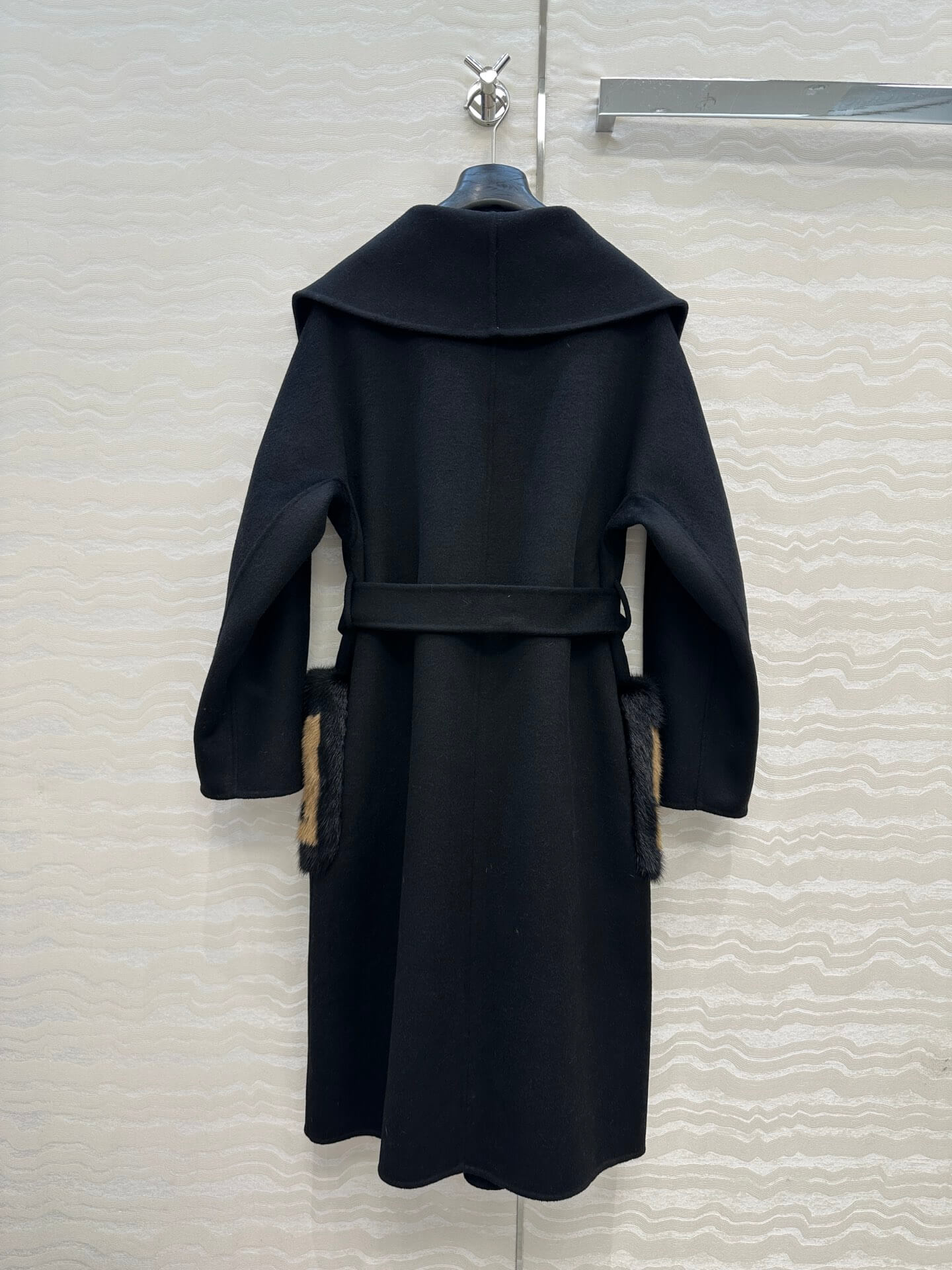
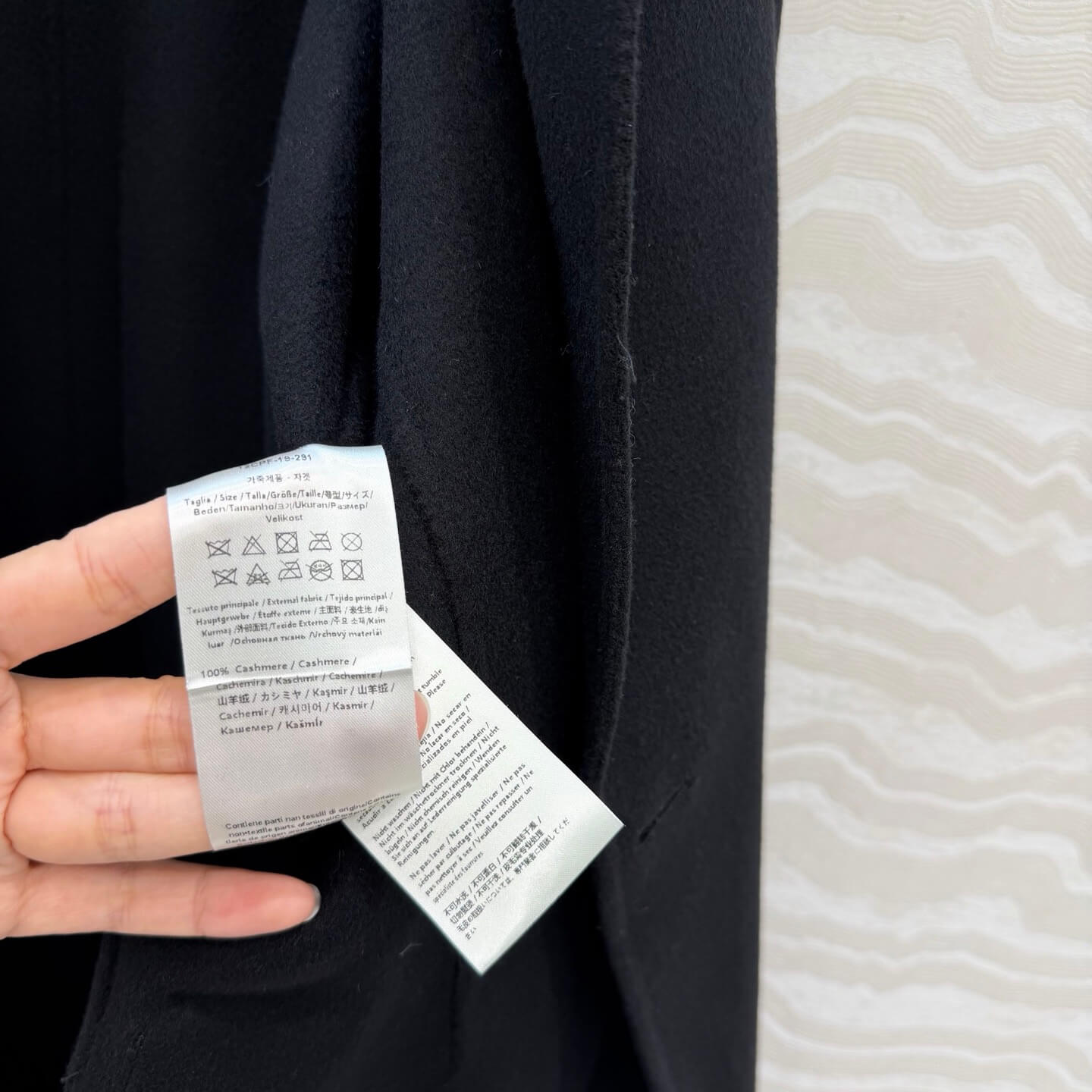
Fendi FF Monogram Fur Pocket Belted Wool Cashmere Coat – Camel
The Fendi FF Monogram Fur Pocket Belted Wool Cashmere Coat is an elegant outerwear piece designed to combine timeless sophistication with distinctive Italian-inspired detailing. Featuring a luxurious camel wool blend, signature FF logo fur patchwork pockets, and a flattering belted silhouette, it is perfect for refined winter styling, luxury layering, travel, and elevated everyday looks.
Frequently asked questions about designer coats for women.
How many coats does a woman actually need?
Three covers almost every climate: a trench for mild wet weather, a wool overcoat for cold and smart occasions, and a puffer or quilted jacket for casual warmth. A tailored blazer makes a useful fourth as an indoor and transitional layer. Beyond four, coats start sitting unworn.
Is a camel or black coat the better investment?
Camel, in most wardrobes. It lifts black, navy, grey and cream, and it reads as more considered than black, which is common enough to be invisible. Black is more practical for hiding marks and city wear, so choose it if your coat will take heavy daily use.
What length coat is most flattering?
Knee-length suits the widest range of body shapes and outfits, because it covers most hemlines without overwhelming the frame. Mid-calf and full-length read more dramatic and pair best with slim silhouettes underneath. Avoid any coat ending at the widest point of your hip, which shortens the leg.
Can you wear a puffer jacket with smart clothes?
Yes, and the contrast is what makes it work. A plain, well-fitted puffer over tailored trousers and a leather shoe reads as deliberate rather than sporty. Choose a matte finish in a neutral colour, keep the length short or knee-length, and avoid visible technical branding.
How should you store a wool coat in summer?
Clean it before storing, since moths are drawn to body oils and food traces rather than the wool itself. Hang it on a broad shoulder hanger inside a breathable cotton garment bag, never plastic, and keep it somewhere dry and dark. Cedar blocks help more than sprays.
Are trench coats still in style?
The trench is one of the few genuinely trend-proof garments, which is why it reappears every autumn rather than cycling in and out. Its shape has changed at the edges, looser cuts and longer lengths in recent seasons but the classic belted stone gabardine version never stops working.
{“@context”:”https://schema.org”,”@type”:”FAQPage”,”mainEntity”:[{“@type”:”Question”,”name”:”How many coats does a woman actually need?”,”acceptedAnswer”:{“@type”:”Answer”,”text”:”Three covers almost every climate: a trench for mild wet weather, a wool overcoat for cold and smart occasions, and a puffer or quilted jacket for casual warmth. A tailored blazer makes a useful fourth as an indoor and transitional layer. Beyond four, coats start sitting unworn.”}},{“@type”:”Question”,”name”:”Is a camel or black coat the better investment?”,”acceptedAnswer”:{“@type”:”Answer”,”text”:”Camel, in most wardrobes. It lifts black, navy, grey and cream, and it reads as more considered than black, which is common enough to be invisible. Black is more practical for hiding marks and city wear, so choose it if your coat will take heavy daily use.”}},{“@type”:”Question”,”name”:”What length coat is most flattering?”,”acceptedAnswer”:{“@type”:”Answer”,”text”:”Knee-length suits the widest range of body shapes and outfits, because it covers most hemlines without overwhelming the frame. Mid-calf and full-length read more dramatic and pair best with slim silhouettes underneath. Avoid any coat ending at the widest point of your hip, which shortens the leg.”}},{“@type”:”Question”,”name”:”Can you wear a puffer jacket with smart clothes?”,”acceptedAnswer”:{“@type”:”Answer”,”text”:”Yes, and the contrast is what makes it work. A plain, well-fitted puffer over tailored trousers and a leather shoe reads as deliberate rather than sporty. Choose a matte finish in a neutral colour, keep the length short or knee-length, and avoid visible technical branding.”}},{“@type”:”Question”,”name”:”How should you store a wool coat in summer?”,”acceptedAnswer”:{“@type”:”Answer”,”text”:”Clean it before storing, since moths are drawn to body oils and food traces rather than the wool itself. Hang it on a broad shoulder hanger inside a breathable cotton garment bag, never plastic, and keep it somewhere dry and dark. Cedar blocks help more than sprays.”}},{“@type”:”Question”,”name”:”Are trench coats still in style?”,”acceptedAnswer”:{“@type”:”Answer”,”text”:”The trench is one of the few genuinely trend-proof garments, which is why it reappears every autumn rather than cycling in and out. Its shape has changed at the edges — looser cuts and longer lengths in recent seasons — but the classic belted stone gabardine version never stops working.”}}]}