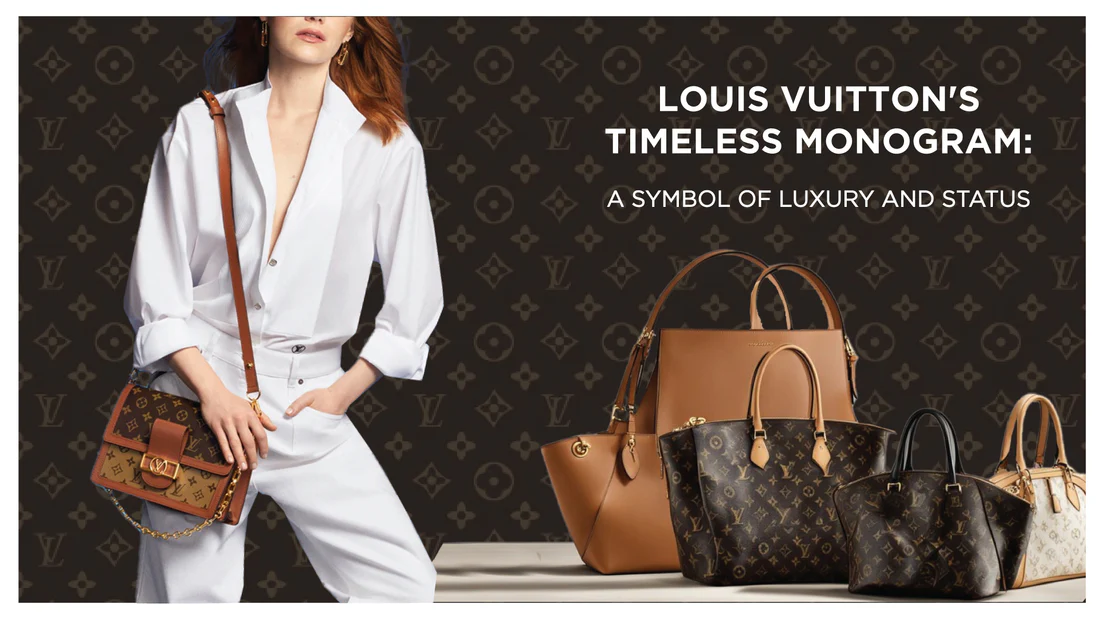
In the fast-paced world of “fast fashion” and viral TikTok aesthetics, the word icon is often thrown around loosely. However, true fashion icons are not built in a season they are forged over centuries. While trends like “quiet luxury” or “ballet core” might dominate your feed today, the Louis Vuitton monogram has remained a constant North Star for over 130 years.
Positioned as one of the most recognizable luxury symbols in history, the interlocking “LV” is more than just a brand logo; it is a visual shorthand for heritage, adventure, and status. In this article, we’ll dive into the fascinating history of the monogram’s origin, what these symbols actually mean, and how this pattern continues to define the modern wardrobe.

The Origins of the Louis Vuitton Monogram
The story of the monogram doesn’t begin with a marketing team, but with a need for protection. Before it was a fashion statement, Louis Vuitton was a master trunk maker in Paris, revolutionizing travel for the elite with his flat-topped, stackable trunks.
Why the Monogram Was Created
By the late 19th century, Louis Vuitton’s success had a significant side effect: counterfeiting. To safeguard the brand’s reputation for craftsmanship, Louis’s son, Georges Vuitton, designed the iconic monogram in 1896 as a tribute to his late father.
- The Design: Georges combined the “LV” initials with three distinct floral motifs.
- The Inspiration: These quatrefoils and stylized flowers were heavily influenced by the Japonisme movement (Japanese art and design), which was sweeping through European high society at the time.
- The Goal: The intricate, repeating pattern was extremely difficult for imitators to replicate by hand, serving as the industry’s first “watermark” of authenticity.
What the Monogram Symbolizes
Beyond its history as an anti-counterfeiting measure, the Louis Vuitton monogram carries a deep psychological weight.
Exclusivity and Craftsmanship
The pattern represents a commitment to the “Art of Travel.” For generations, seeing an LV-monogrammed trunk meant the owner was a global traveler of means. This heritage of durability canvas that is waterproof, fireproof, and practically indestructible signals a level of craftsmanship that transcends a simple price tag.

The Psychology of Repeating Patterns
There is a reason why repeating patterns, such as the LV monogram, signal luxury. Psychologically, the human brain finds symmetry and repetition aesthetically pleasing and orderly. In a luxury context, this constant repetition acts as a “frequency illusion,” cementing the brand’s identity in the viewer’s mind until the pattern itself becomes synonymous with success and refinement.
Iconic Louis Vuitton Styles That Defined Generations
Over the decades, certain Louis Vuitton styles have transitioned from functional travel gear to essential fashion staples.
Classic Bags That Shaped the Brand
- The Speedy: Originally released in 1930 as the “Express,” this bag became a permanent icon after Audrey Hepburn requested a smaller version (the Speedy 25) in 1965.
- The Neverfull: Introduced in 2007, this tote redefined the everyday bag. It is arguably the world’s most recognizable luxury tote.
- The Keepall: The grandfather of the modern duffle bag, designed for the stylish weekend getaway.
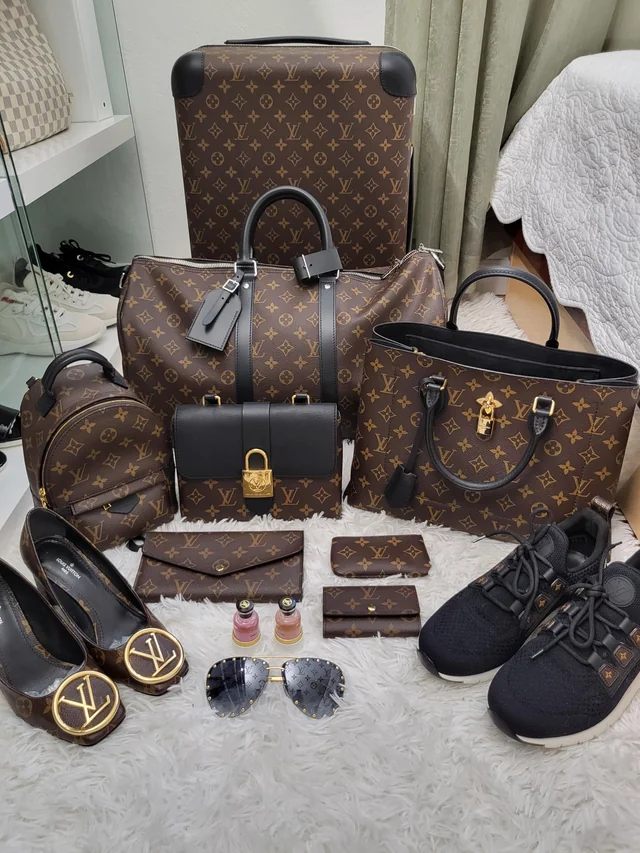
Footwear & Accessories That Modernized the Monogram
While the bags are legendary, the monogram has moved down to the feet and around the neck:
- Sneakers: High-end sneakers featuring subtle monogram accents have bridged the gap between streetwear and high fashion.
- Loafers & Flats: A monogrammed toe cap or heel adds an instant touch of “old world” class to a modern office look.
- Scarves & Belts: These act as “entry-point” luxuries, allowing women to wear the icon in a more understated, accented way.

How Louis Vuitton Reinvents the Monogram Without Losing Identity
A brand cannot survive 130 years by standing still. Louis Vuitton’s secret is reinterpretation. By balancing heritage with modern fashion, they ensure the monogram stays fresh for every new generation.
- Creative Collaborations: From the pop-art colors of Takashi Murakami to the edgy streetwear influence of Virgil Abloh, the brand invites visionaries to “disrupt” the pattern.
- Scale and Texture: Sometimes the monogram is oversized (“Giant Monogram”), embossed into leather (Empreinte), or rendered in denim.
- Evolution of Design: While the 1896 pattern remains the core, the brand continually tweaks silhouettes and materials, demonstrating that a classic is only as good as its ability to adapt.
Why the Monogram Still Dominates Women’s Fashion Today
For the modern woman, the Louis Vuitton monogram is a versatility powerhouse. It has the unique ability to look just as “at home” with a pair of distressed jeans and a white tee as it does with a tailored evening suit.
Women gravitate toward these iconic patterns for recognition. In a world where we are constantly making first impressions, an iconic accessory speaks a universal language of quality and taste before you even say a word. It is a piece of history you can carry, lending a sense of permanence to an otherwise fleeting wardrobe.
Inspired Design vs. Original Icons
In the broader fashion ecosystem, the influence of the Louis Vuitton monogram is undeniable. It has given rise to the concept of inspired fashion where the “language” of luxury (the use of repeating patterns, the focus on structured silhouettes, and the marriage of brown and tan tones) influences the entire industry.
Understanding this design language allows women to enjoy the aesthetic of high-end fashion responsibly. You don’t always need the original trunk to appreciate the history of the quatrefoil or the elegance of a structured tote. By learning to recognize the elements of craftsmanship and heritage, you can curate a personal style that feels expensive and intentional, regardless of the brand on the label.
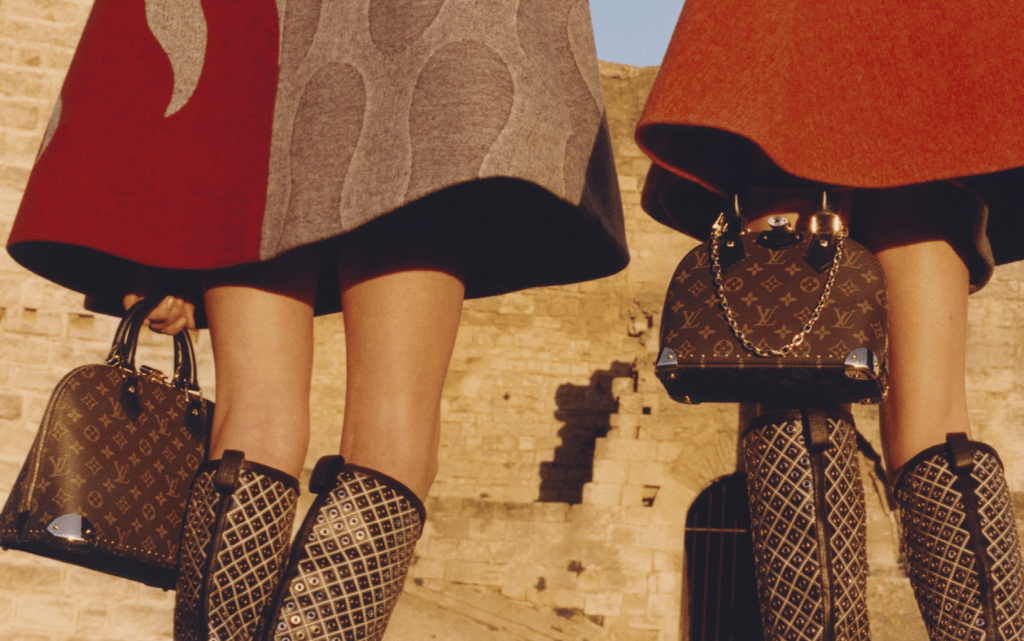
Conclusion: Icons Don’t Follow Trends. They Create Them
The Louis Vuitton monogram endures because it represents a rare intersection of utility and art. It reminds us that while clothes may come and go, a commitment to a specific design language can build a legacy that lasts for centuries.
At Hollo Ladies, we celebrate the design language of fashion’s most iconic houses, helping you build a wardrobe as timeless as the icons that inspired it.
FAQ: Everything You Need to Know About the LV Monogram
Why is the Louis Vuitton monogram so popular? Its popularity stems from a mix of historical prestige, a reputation for extreme durability, and the “status symbol” effect. It is a globally recognized shorthand for luxury, worn by everyone from royalty to modern-day celebrities.
Is the Louis Vuitton monogram timeless? Yes. Unlike “seasonal” patterns that go out of style after a year, the LV monogram has been in continuous use since 1896. It has survived world wars, economic shifts, and dozens of fashion cycles without losing its value or appeal.
What are the most iconic Louis Vuitton styles? The most legendary styles include the Speedy (handbag), the Neverfull (tote), the Keepall (travel bag), and the Alma (structured dome bag). In modern fashion, monogrammed sneakers and reversible belts have also reached “must-have” status.

One response to “The Evolution of an Icon: Why the Louis Vuitton Monogram Never Goes Out of Style”
[…] Vuitton is known for its timeless monogram aesthetic, refined silhouettes, and deep travel heritage. The brand began with luggage and trunks, and that […]